


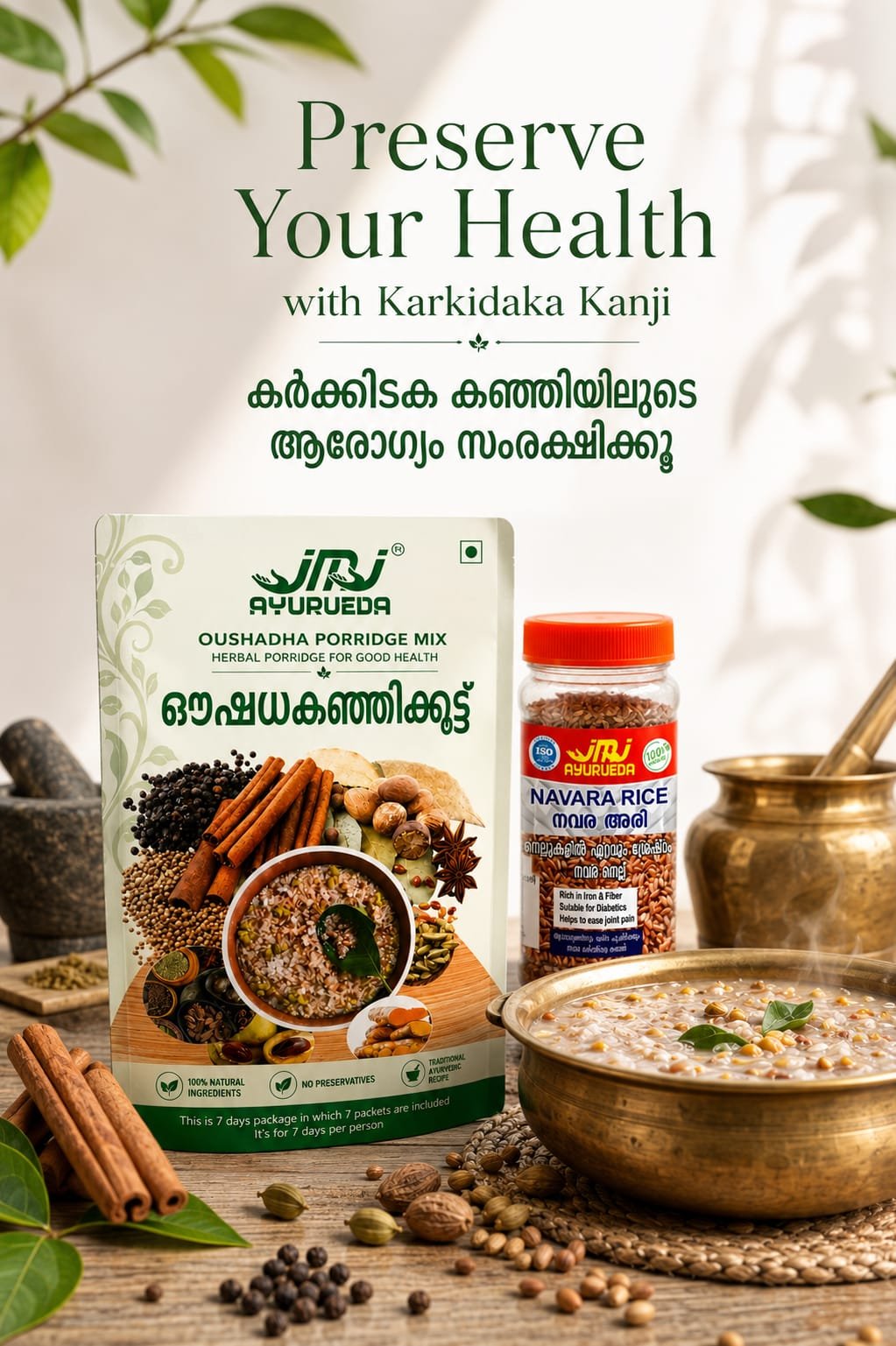
Karkidaka Kanji & Navara Rice: Kerala’s Traditional Monsoon Wellness Food
Every year, during the Malayalam month of Karkidakam, many households in Kerala prepare Karkidaka Kanji, a traditional Ayurvedic rice porridge made using Navara Rice (Njavara Rice), medicinal herbs, and carefully selected spices. This seasonal preparation has been part of Kerala’s wellness traditions for generations and is closely associated with Ayurvedic dietary practices during the monsoon season.
The rainy season often brings changes in weather, humidity, and daily routines. In Ayurveda, this period is considered a time when many people benefit from warm, freshly prepared, nourishing foods. Karkidaka Kanji is traditionally consumed during this season as part of a balanced diet and healthy lifestyle.
The key ingredient, Navara Rice, is one of Kerala’s most treasured traditional rice varieties. Unlike ordinary polished rice, Navara Rice is valued for its unique heritage, nutritional profile, and long-standing use in Ayurvedic food preparations. When combined with traditional herbs and spices, it creates a wholesome meal that has remained popular across generations.
In this complete guide, you’ll learn:
- What Karkidaka Kanji is
- Why it is prepared during Karkidakam
- What makes Navara Rice special
- Traditional ingredients used
- Nutritional value
- Health benefits
- Preparation method
- Who can consume it
- Frequently asked questions
- Tips for choosing authentic Navara Rice
Whether you are exploring Kerala’s traditional cuisine, following Ayurvedic seasonal practices, or looking for information about Navara Rice, this guide will help you understand everything you need to know.
What is Karkidaka Kanji?
Karkidaka Kanji is a traditional Kerala herbal rice porridge prepared during the Malayalam month of Karkidakam (July–August). It is commonly made using Navara Rice (Njavara Rice) together with selected herbs, spices, and other natural ingredients that are traditionally used in Ayurvedic cooking.
For centuries, families across Kerala have prepared this nourishing porridge as part of their seasonal dietary practices. While recipes differ from one region or household to another, the purpose remains the same—to enjoy a warm, wholesome meal during the monsoon season.
Common ingredients include:
- Navara Rice
- Fenugreek
- Cumin
- Dry Ginger
- Garlic
- Green Gram
- Coconut Milk (optional)
- Traditional Ayurvedic herbal powders
Each family may use slightly different ingredients based on local traditions and Ayurvedic recommendations.
Why is Karkidaka Kanji Important During Karkidakam?
The Malayalam month of Karkidakam is widely recognized in Kerala as a season for traditional Ayurvedic wellness practices. During the monsoon, many people prefer freshly prepared, warm foods as part of their regular diet.
Karkidaka Kanji has traditionally been included in seasonal meal plans because it combines wholesome grains with herbs and spices that are commonly used in Ayurvedic cuisine. The preparation reflects Kerala’s long-standing food traditions and cultural practices associated with the rainy season.
Even today, many households continue this tradition, making Karkidaka Kanji an important part of Kerala’s culinary and Ayurvedic heritage.
What is Navara Rice (Njavara Rice)?
Navara Rice, also known as Njavara Rice, is a traditional rice variety indigenous to Kerala. It has been cultivated for centuries and holds a special place in Ayurvedic food traditions.
Unlike regular polished rice, Navara Rice is appreciated for its distinctive colour, taste, texture, and nutritional profile. It is widely used in traditional recipes, particularly Karkidaka Kanji, because of its heritage and cultural significance.
Today, authentic Navara Rice continues to be grown in selected regions of Kerala and is valued by people who prefer traditional rice varieties in their daily diet.
Health Benefits of Karkidaka Kanji
Karkidaka Kanji is one of Kerala’s most cherished traditional monsoon foods. Prepared with Navara Rice, herbs, spices, and other wholesome ingredients, it is traditionally consumed during the Malayalam month of Karkidakam as part of seasonal Ayurvedic dietary practices. While individual health effects depend on the ingredients used and personal health conditions, Karkidaka Kanji is widely appreciated as a nourishing, comforting meal during the rainy season.
1. Provides Nourishment During the Monsoon
The rainy season often brings changes in climate and eating habits. Karkidaka Kanji is traditionally prepared as a warm, freshly cooked meal that provides energy and nourishment during this period.
2. Supports Healthy Digestion
Traditional recipes commonly include cumin, dry ginger, garlic, and fenugreek. These ingredients have long been used in Indian cooking and Ayurveda and may help support normal digestion when included as part of a balanced diet.
3. A Comforting Seasonal Meal
Served warm, Karkidaka Kanji is easy to enjoy during cool and rainy weather. It has been a household favourite in Kerala for generations.
4. Provides Sustained Energy
Navara Rice supplies complex carbohydrates, which provide a gradual release of energy compared with highly refined grains.
5. Naturally Rich in Dietary Fibre
When prepared with whole traditional ingredients, Karkidaka Kanji contributes dietary fibre that supports normal digestive health.
6. Supports a Balanced Diet
The combination of rice, pulses, herbs, and spices makes Karkidaka Kanji a wholesome meal that can fit into a balanced diet.
7. Traditional Ayurvedic Importance
In Ayurveda, Karkidaka Kanji is traditionally consumed during Karkidakam as part of seasonal dietary practices aimed at maintaining general wellness.
8. Easy to Digest for Many People
Because it is cooked into a soft porridge, many people find Karkidaka Kanji easier to digest than heavier meals, although individual experiences may vary.
9. A Source of Plant-Based Nutrition
When green gram and other pulses are included, Karkidaka Kanji provides plant-based protein along with carbohydrates and fibre.
10. Keeps Traditional Food Culture Alive
Preparing Karkidaka Kanji helps preserve Kerala’s rich culinary and Ayurvedic heritage, passing traditional recipes from one generation to the next.
Health Benefits of Navara Rice
Navara Rice, also known as Njavara Rice, is one of Kerala’s most respected indigenous rice varieties. It is valued not only for its heritage but also for its nutritional composition and traditional use in Ayurvedic preparations.
Rich in Complex Carbohydrates
Navara Rice provides complex carbohydrates that help supply energy for daily activities.
Contains Dietary Fibre
Compared with highly polished rice, traditional whole Navara Rice generally contains more dietary fibre, which supports normal digestive function.
Source of Essential Minerals
Navara Rice naturally contains minerals such as:
- Iron
- Magnesium
- Calcium
- Phosphorus
- Potassium
These minerals contribute to normal body functions as part of a balanced diet.
Contains Natural Plant Compounds
Traditional coloured rice varieties like Navara Rice contain naturally occurring plant compounds, including antioxidants.
Traditional Ayurvedic Significance
Navara Rice has been used for centuries in Ayurvedic food preparations and continues to be valued in Kerala’s traditional wellness practices.
Heritage Grain of Kerala
Unlike many modern rice varieties, Navara Rice is an indigenous heritage crop cultivated in selected parts of Kerala using traditional farming practices.
Suitable for Traditional Recipes
Navara Rice is commonly used to prepare:
- Karkidaka Kanji
- Medicinal Rice Porridge
- Traditional Kerala Rice Dishes
- Ayurvedic Dietary Preparations
Its unique texture and flavour make it especially suitable for these recipes.
Naturally Filling
Because it contains complex carbohydrates and fibre, Navara Rice can contribute to a satisfying meal when eaten in appropriate portions.
A Traditional Choice for Seasonal Eating
Many families in Kerala continue to include Navara Rice in their meals during Karkidakam, reflecting long-standing cultural and culinary traditions.
Supports Dietary Diversity
Including traditional grains such as Navara Rice can help add variety to the diet and encourage the preservation of indigenous food crops.
Why is Navara Rice Used in Karkidaka Kanji?
Navara Rice is traditionally preferred because of its:
- Heritage value
- Traditional Ayurvedic importance
- Distinct flavour
- Soft texture after cooking
- Compatibility with herbs and spices commonly used in Karkidaka Kanji
Its long association with Kerala’s seasonal food traditions has made it the preferred rice for preparing this classic monsoon porridge.
Nutritional Value of Navara Rice
Although the exact nutritional composition varies depending on cultivation and processing, Navara Rice generally contains:
- Complex Carbohydrates
- Dietary Fibre
- Plant Protein
- Iron
- Calcium
- Magnesium
- Potassium
- Phosphorus
- Naturally occurring antioxidants
These nutrients make Navara Rice a wholesome ingredient that can be included as part of a balanced and varied diet.
Ingredients Used in Traditional Karkidaka Kanji
The ingredients used in Karkidaka Kanji may vary across different regions of Kerala and family traditions. However, the following ingredients are commonly used in traditional preparations:
- Navara Rice (Njavara Rice)
- Green Gram (Cherupayar)
- Fenugreek Seeds
- Cumin Seeds
- Dry Ginger Powder
- Garlic
- Coconut Milk (Optional)
- Traditional Ayurvedic Herbal Powder (depending on the recipe)
- Rock Salt or Black Salt (optional, based on preference)
Each ingredient contributes to the flavour, aroma, and nutritional value of the porridge.
How to Prepare Traditional Karkidaka Kanji
Ingredients
- 1 cup Navara Rice
- ¼ cup Green Gram
- 1 tsp Fenugreek Seeds
- 1 tsp Cumin Seeds
- ½ tsp Dry Ginger Powder
- 5–6 Garlic Cloves
- Water as required
- Coconut Milk (Optional)
- Salt to taste
Preparation Method
- Wash the Navara Rice thoroughly.
- Lightly roast the green gram until aromatic.
- Add the rice, green gram, fenugreek, garlic, and sufficient water to a pot or pressure cooker.
- Cook until the rice becomes soft.
- Add cumin and dry ginger powder.
- Stir well and simmer for a few minutes.
- Add coconut milk if preferred and cook briefly.
- Serve warm.
Who Can Enjoy Karkidaka Kanji?
Karkidaka Kanji can generally be enjoyed as part of a balanced diet by many people, including:
- Adults
- Senior citizens
- Individuals looking to enjoy traditional Kerala foods
- Those interested in Ayurvedic seasonal dietary practices
People with specific medical conditions, dietary restrictions, or allergies should consult a qualified healthcare professional before making significant dietary changes.
Best Time to Eat Karkidaka Kanji
Traditionally, Karkidaka Kanji is consumed:
- During the Malayalam month of Karkidakam (July–August)
- Freshly prepared and served warm
- As part of a balanced meal during the monsoon season
Many households include it regularly during Karkidakam according to family customs.
How to Choose Quality Navara Rice
When purchasing Navara Rice, consider the following:
- Buy from a trusted brand.
- Check that the rice is clean and properly packed.
- Look for clear manufacturing and expiry dates.
- Store in a cool, dry place after opening.
- Choose authentic Kerala Navara Rice for traditional recipes.
Frequently Asked Questions (FAQs)
What is Karkidaka Kanji?
Karkidaka Kanji is a traditional Kerala herbal rice porridge prepared during the Malayalam month of Karkidakam using Navara Rice and other traditional ingredients.
What is Navara Rice?
Navara Rice (Njavara Rice) is a traditional rice variety from Kerala widely used in Ayurvedic food preparations and traditional recipes.
Is Navara Rice different from ordinary rice?
Yes. Navara Rice is an indigenous heritage rice variety known for its distinctive taste, appearance, and traditional importance.
Can children eat Karkidaka Kanji?
Depending on the ingredients and the child’s age, it may be included as part of a balanced diet. Parents should consult a pediatrician for individualized advice.
Is Karkidaka Kanji suitable for everyday consumption?
It is traditionally consumed during Karkidakam, but it may also be enjoyed at other times as part of a balanced diet if it suits your nutritional needs.
Where can I buy authentic Navara Rice?
Authentic Navara Rice is available from trusted Ayurvedic brands, specialty stores, and reliable online sellers.
Conclusion
Karkidaka Kanji and Navara Rice represent more than just traditional foods—they reflect Kerala’s rich culinary heritage and seasonal wellness practices. Prepared with carefully selected ingredients and enjoyed during the monsoon, this nourishing porridge continues to be a cherished part of many households.
Whether you are exploring traditional Kerala cuisine, following Ayurvedic seasonal practices, or simply looking to include heritage grains in your meals, Navara Rice and Karkidaka Kanji offer a meaningful way to connect with time-honoured food traditions.
If you are looking for authentic Navara Rice and a traditional Karkidaka Kanji Kit, choose products from JMJ Ayurvedha, prepared with carefully selected ingredients inspired by Kerala’s Ayurvedic heritage.
Buy Authentic Karkidaka Kanji Kit & Navara Rice from JMJ Ayurvedha
Experience the goodness of Kerala’s traditional monsoon wellness foods with JMJ Ayurvedha.
✔ Premium Quality Navara Rice
✔ Traditional Karkidaka Kanji Kit
✔ Carefully Selected Ingredients
✔ Inspired by Kerala’s Ayurvedic Heritage
✔ Available Across India
Explore our collection and bring the authentic taste of Kerala’s traditional wellness foods to your home.